
What Data4Citizen makes possible
Platforms already in production, followed by six usage scenarios presented as problem, approach and benefit.
References
Platforms in production
A national portal, a regional platform, an observatory: these public websites are built with Data4Citizen and used every day.
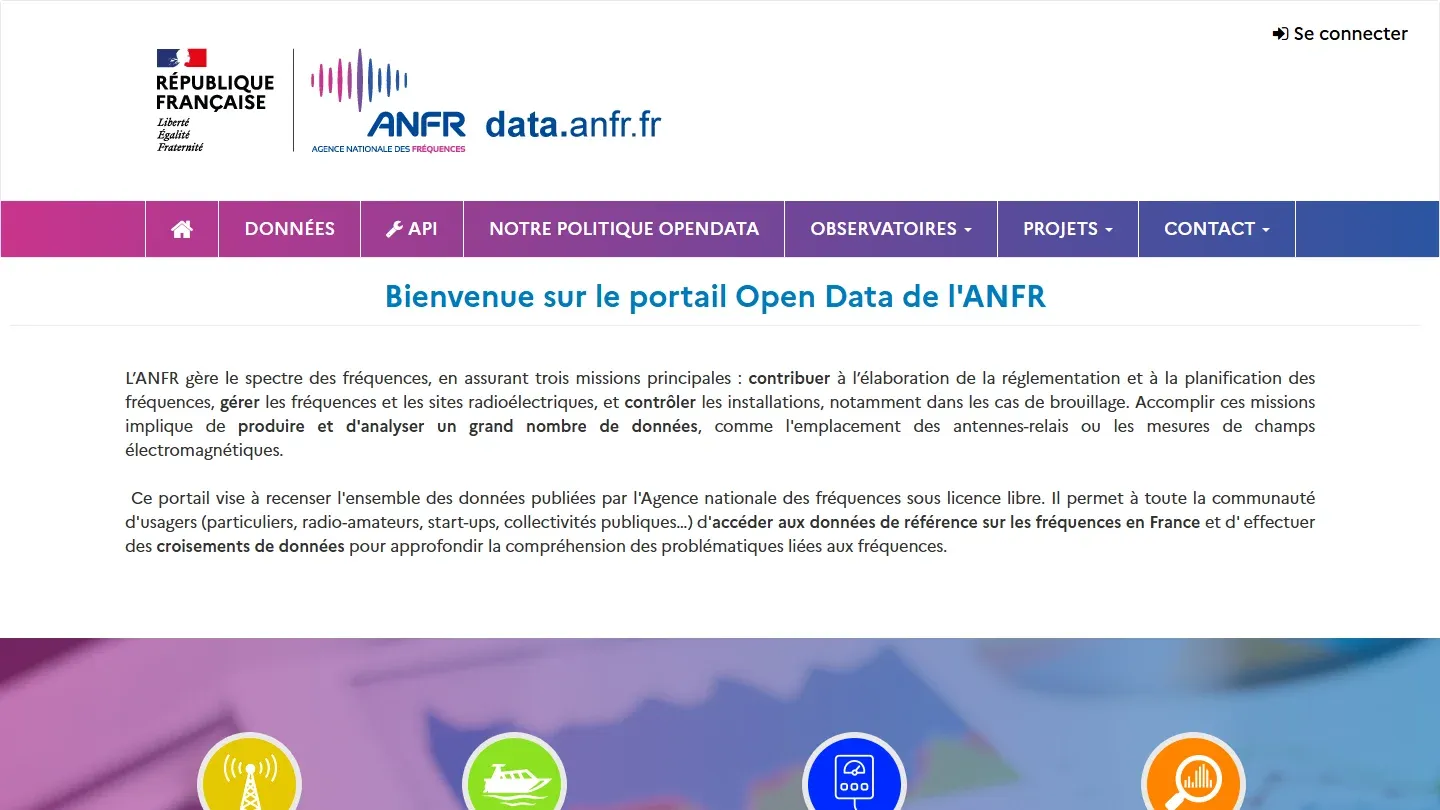
National Open Data portal
data.anfr.fr(opens in a new tab)
French National Frequency Agency (ANFR)
ANFR’s Open Data portal lists all the data the Agency publishes under an open licence, giving every kind of user — individuals, radio amateurs, start-ups, local authorities — access to reference data on radio frequencies in France, and the means to cross-analyse it.
- Data catalogue and API
- Thematic observatories: mobile masts, maritime radio, smart meters, SAR
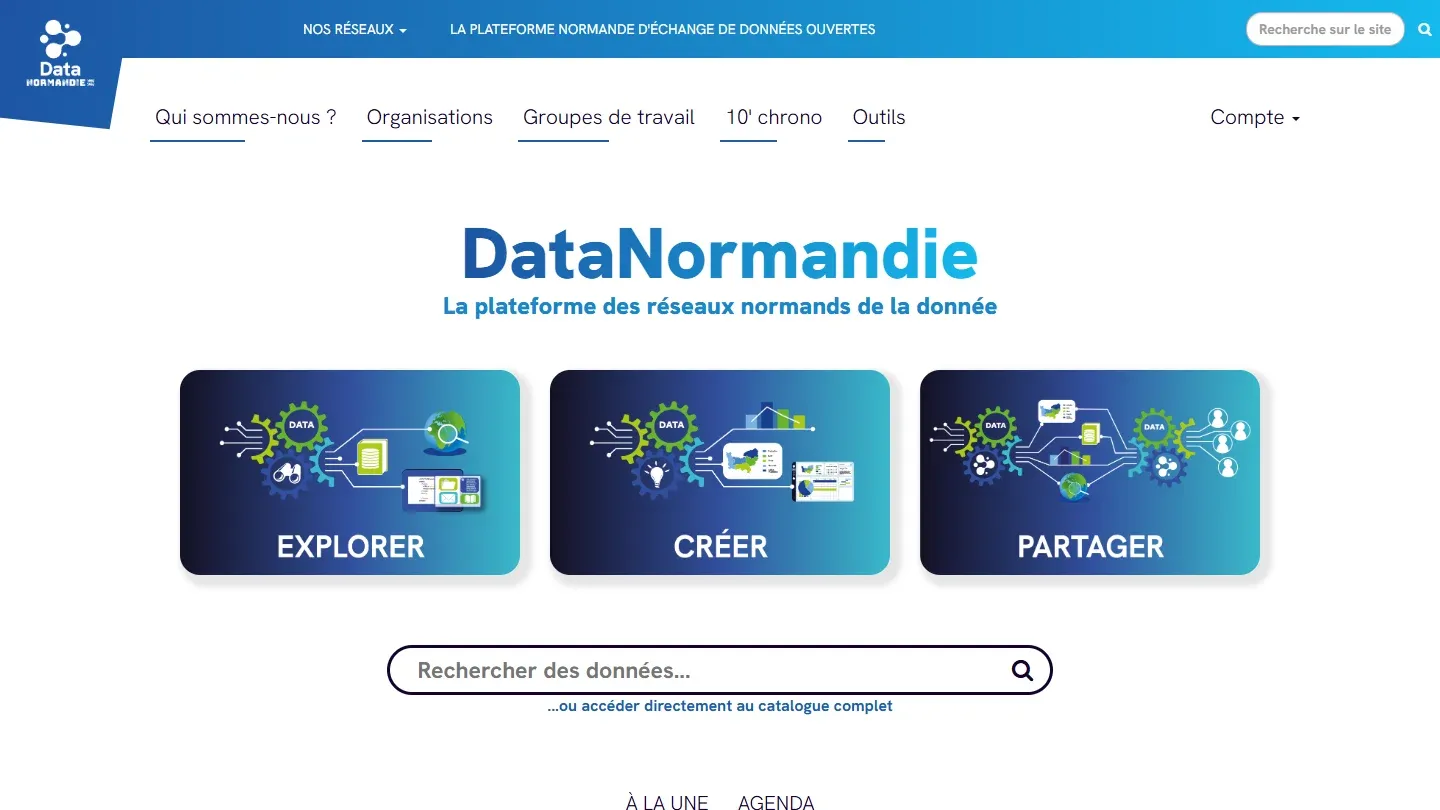
Regional data platform
DataNormandie(opens in a new tab)
Normandy data networks
DataNormandie is Normandy’s open data exchange platform, serving the region’s data networks: public bodies and partners publish, explore and share their datasets there.
- “Explore, Create, Share” journeys
- Spaces for each organisation and working groups
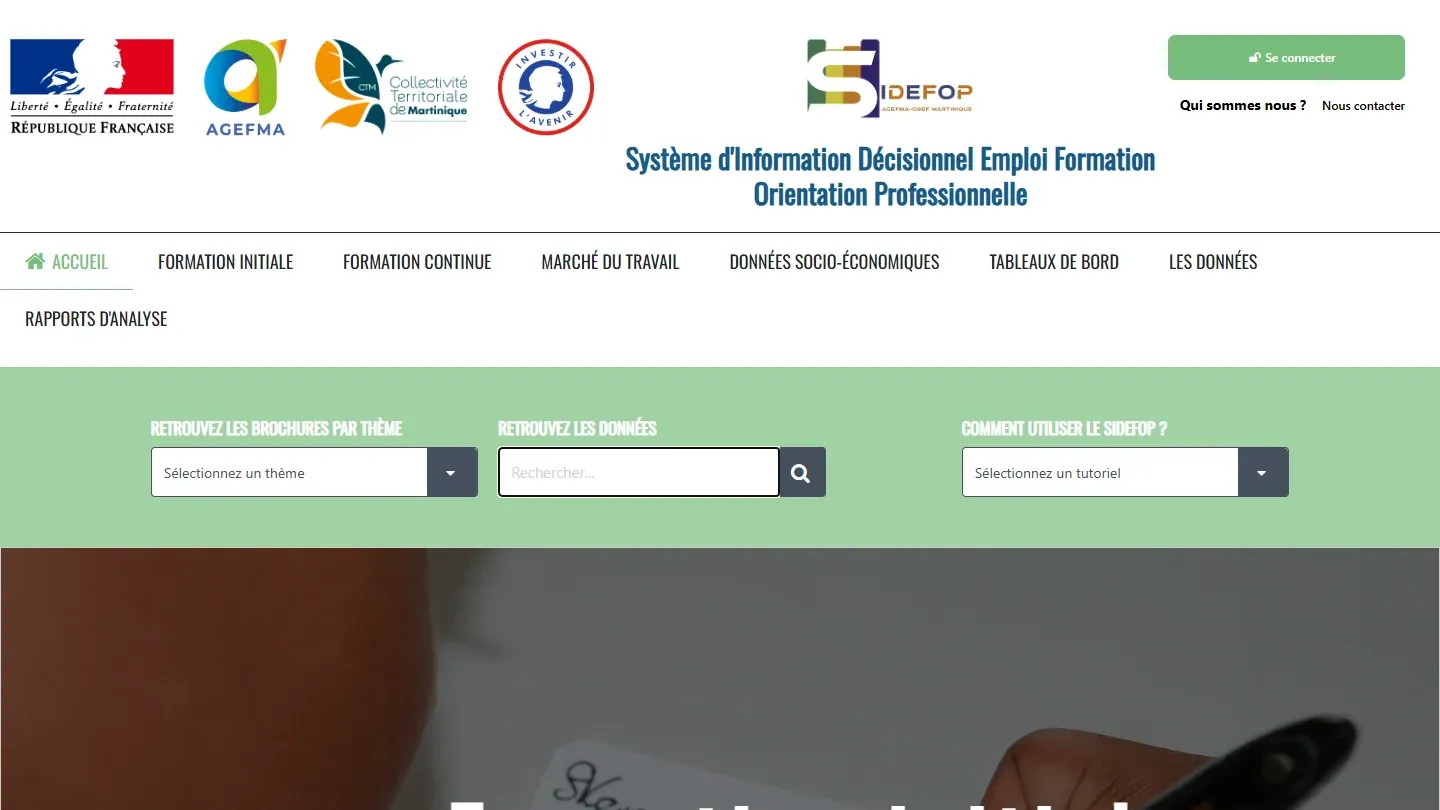
Regional observatory
SIDEFOP(opens in a new tab)
AGEFMA – OREF Martinique
SIDEFOP — the decision-support information system for employment, training and career guidance — is AGEFMA’s observatory in Martinique, bringing together data, dashboards and analysis reports on training, employment and the island’s socio-economic context.
- Initial and continuing training, labour market
- Dashboards, socio-economic data, analysis reports
Scenarios
Six usage scenarios
These scenarios describe common situations in public and private organisations. They are generic: where one of the references above illustrates a scenario, a link points to it.
Regional Open Data portal
For: Municipalities, inter-municipal bodies, departments, regions
See it in action: DataNormandie, data.anfr.fr
- The problem
- Public data is scattered across departments and formats, hard to find and rarely documented. Open data obligations feel like a burden rather than an opportunity.
- The approach
- Set up a single catalogue fed by the producing departments, with descriptive records, clear licences and API access. Support staff in documenting and publishing data.
- The expected benefit
- A single entry point for citizens, businesses and researchers; reusable data; a regulatory obligation turned into a public service.
Regional or sector observatory
For: Urban planning agencies, joint authorities, thematic observatories
See it in action: SIDEFOP
- The problem
- Annual reports freeze indicators that quickly go out of date. Elected officials and partners lack an up-to-date, shared view of their area or sector.
- The approach
- Build an online observatory: indicators computed from the sources, thematic maps and charts, editorial pages that put the figures in context.
- The expected benefit
- Up-to-date indicators available at any time; a shared reading among partners; less time spent producing annual reviews.
Data analysis and visualisation
For: Business departments, research and foresight teams
- The problem
- Analyses rely on hand-edited files that are hard to reproduce and share. Dashboards are built case by case.
- The approach
- Centralise reference data, automate processing and provide reusable dashboards, with exports for one-off needs.
- The expected benefit
- Reproducible, traceable analyses; less time spent preparing data; results that can be shared with decision-makers.
Querying data in natural language
For: Public servants, elected officials, citizens, journalists
- The problem
- Finding the right data means knowing the catalogue’s vocabulary, codes and file structures. Many people give up before they find it.
- The approach
- Offer an assistant that understands a plain-language question, identifies the relevant datasets, drafts an answer and links back to the sources used.
- The expected benefit
- Data access opened up to non-specialists; verifiable answers; a better-used catalogue.
Making the most of public data
For: Public bodies, operators, institutions
- The problem
- High-quality data exists but is neither known nor reused. Its value stays locked in the systems that produce it.
- The approach
- Identify high-potential datasets, document them, publish them and showcase them in feature stories, visualisations and APIs for reusers.
- The expected benefit
- Greater visibility for public action; reuse by third parties; a credible transparency approach.
Supporting public policy with data
For: Local executives, senior management, programme leads
- The problem
- Decisions rely on partial diagnoses and indicators that vary between departments. Tracking the effects of a policy is difficult.
- The approach
- Define shared indicators, update them regularly, track them in a common dashboard and publish them where relevant.
- The expected benefit
- Better-informed decisions; long-term monitoring; transparent communication on results.
Sound familiar?
Every project is different. Tell us about your context and we will work out the most suitable scenario together.